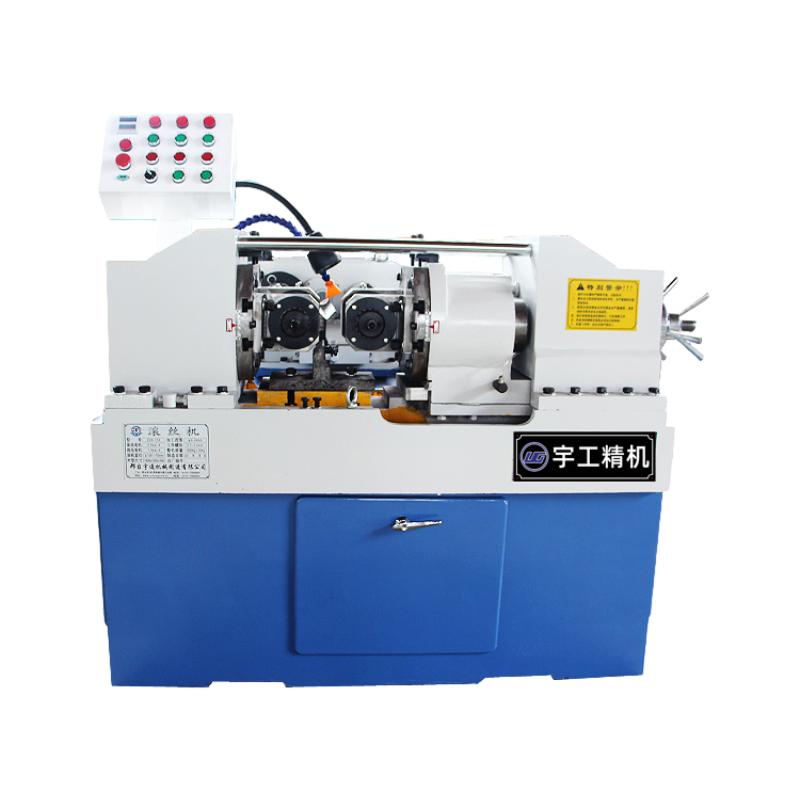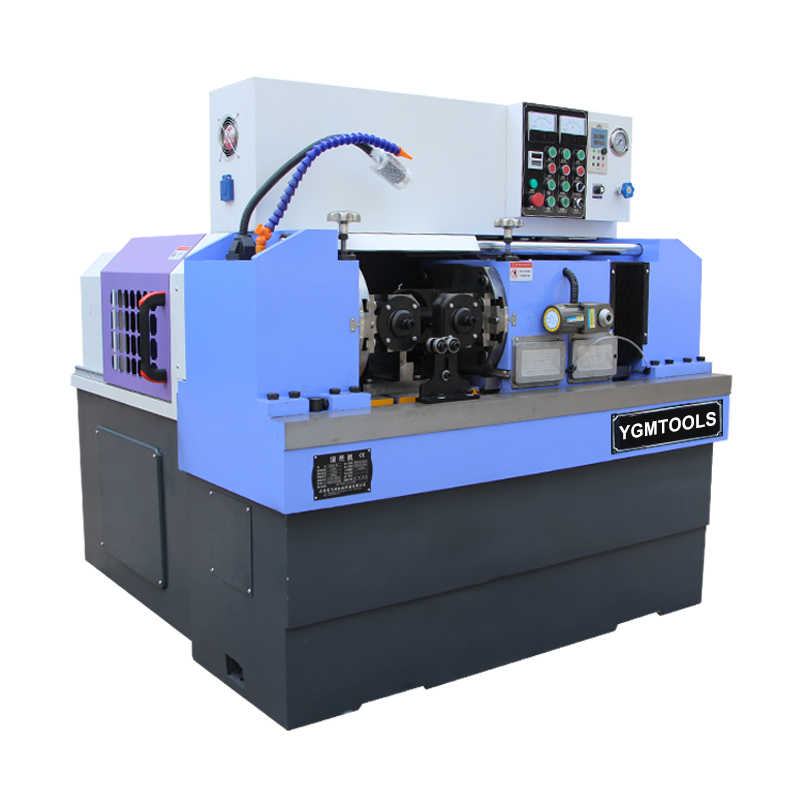
High Precision Discount Rod Thread Rolling Machine Type 250
Precision threading is a cornerstone of high-strength fastener production, where the integrity of the rod depends entirely on the forming process. Unlike traditional cutting methods, thread rolling uses cold forming to displace metal, enhancing the structural grain flow and increasing the fatigue strength of the resulting part. For procurement managers seeking a balance between industrial-grade performance and cost-efficiency, identifying a reliable source for a discount rod thread rolling machine requires a deep dive into technical specifications and manufacturer capabilities.
The Type 250 model represents a strategic entry point for workshops needing versatility. By integrating Siemens electrical components and intelligent control panels, this machinery simplifies the transition between ordinary, trapezoidal, and modular threads. Whether you are producing standard bolts or specialized industrial anchors, the focus remains on maintaining tight tolerances while reducing operational overhead through frequency conversion speed control.

Advanced Engineering of the Type 250 Thread Rolling System
The Type 250 thread rolling machine is engineered to handle the rigorous demands of modern metal processing. At its core, the system utilizes a high-precision drive mechanism paired with a Siemens intelligent control panel. This combination ensures that the operator has absolute control over the rolling process, minimizing human error and maximizing output consistency. The integration of frequency conversion allows for seamless speed adjustments, which is critical when working with different materials or thread pitches.
One of the primary technical advantages of this equipment is its ability to produce various thread profiles. From standard external threads to complex trapezoidal and modular configurations, the machine adapts to the specific requirements of the workpiece. The cold-rolling process ensures that the threads are not "cut" out of the material, but rather pressed into place, which prevents the stress concentrations typically found in lathe-cut threads.
- Siemens Control Integration: High-reliability electrical components for long-term industrial stability.
- Frequency Conversion: Precise speed modulation to optimize rolling quality across different alloys.
- Multi-Profile Capability: Versatile support for ordinary, trapezoidal, and modular thread standards.

Industrial Applications and Material Compatibility
In the realm of specialized equipment manufacturing, the application of thread rolling extends far beyond simple screws. This machinery is widely utilized in the production of high-strength standard parts used in construction, automotive engineering, and heavy machinery. The ability to produce high-precision external threads makes it indispensable for creating components that must withstand extreme tension and vibration.
Specifically, the Type 250 is highly effective for producing hollow grouting anchor production lines and other specialized structural fasteners. Because the process improves the surface finish and hardness of the thread, the resulting parts exhibit superior corrosion resistance and wear characteristics compared to those produced by cutting. This makes the machinery a preferred choice for manufacturers supplying the infrastructure and aerospace sectors.
Operators can leverage the intelligent panel to switch between different production batches quickly. This flexibility is essential for shops that handle a diverse range of orders, allowing them to maintain high throughput without sacrificing the precision required for high-strength standard parts.
Optimizing Procurement through Logistics and Quality Assurance
Acquiring heavy machinery involves more than just selecting a model; it requires a robust logistics strategy to ensure the equipment arrives in peak condition. Hebei Moto Machinery implements a comprehensive packaging protocol using stable plywood to protect the machine from impact during transit. To prevent oxidation and corrosion—especially during sea freight—machines are wrapped in specialized plastic film.
For international buyers, customs clearance is often a bottleneck. The use of fumigation-free packaging streamlines the import process, reducing delays at the port. Whether shipping via Less than Container Load (LCL) or Full Container Load (FCL), the coordination with reputable logistics teams ensures that the machinery is handled with care by skillful workers, maintaining the calibration of the Siemens controls and the precision of the rolling dies.
Furthermore, the adherence to the ISO9001 international quality system certification provides buyers with a layer of trust. It guarantees that the manufacturing process is standardized and that every unit leaving the factory meets the specified technical benchmarks, reducing the risk of post-purchase technical failures.
Technical Comparison and Selection Criteria
| Feature Category | Type 250 Specification | Standard Cutting Method | Operational Impact |
|---|---|---|---|
| Thread Strength | High (Cold Formed) | Moderate (Cut) | Increased Fatigue Life |
| Control System | Siemens Intelligent | Manual/Basic CNC | Higher Precision/Repeatability |
| Speed Control | Frequency Conversion | Fixed/Gear-based | Flexible Material Handling |
| Surface Finish | Mirror-like/Smooth | Tool Marks Present | Lower Friction/Wear |
| Production Speed | High Volume | Lower per-unit speed | Reduced Unit Cost |
Manufacturer Expertise and Service Infrastructure
Hebei Moto Machinery Trading Co., Ltd. brings 28 years of specialized experience to the metal processing industry. Operating under the brands "Yugong" and "Baofeiluo", the company has established a massive infrastructure covering 26,000 square meters. This scale allows for a significant inventory of over 300 models, ensuring that customers can find the specific configuration required for their operational needs without long lead times.
The company's expertise is not limited to the sale of the machine but extends to full automation solutions. By providing high-precision, low-cost machinery, they help users optimize their production lines for maximum efficiency. The presence of dedicated offices and after-sales service departments in China's largest standard parts production base ensures that technical consultation and spare parts are available promptly, reducing potential downtime for global users.
With a track record of exporting to Southeast Asia, the Middle East, Europe, and Africa, the manufacturer understands the regional variations in technical standards and electrical requirements, ensuring that every machine is configured for the destination country's industrial environment.
Future Trends in Thread Rolling Technology
The industry is moving toward greater integration of IoT and AI-driven monitoring. Future iterations of thread rolling machinery are expected to include real-time wear detection for rolling dies, which will further reduce scrap rates and improve part consistency. The shift toward "intelligent manufacturing" means that the current Siemens-based systems are providing the necessary foundation for future software upgrades and remote diagnostics.
Moreover, there is an increasing demand for multi-axis capabilities. While the two-axis and three-axis machines currently dominate the market, the integration of more complex automation for loading and unloading will allow factories to move toward fully autonomous production cells. This evolution will continue to drive down the cost per part while increasing the precision of complex threads used in aerospace and medical devices.
For buyers, the key to future-proofing their investment lies in choosing machinery that offers modularity and scalable control systems. Investing in a platform that supports frequency conversion and intelligent panels ensures that the equipment can be adapted as production requirements evolve.
Frequently Asked Questions About Thread Rolling Machinery
What is the difference between thread rolling and thread cutting?
Thread rolling is a cold-forming process that displaces metal to create threads, which preserves the grain flow of the material and results in higher strength and better surface finish. Thread cutting removes material to create the groove, which can create stress points and slightly lower the overall strength of the bolt.
Can the Type 250 machine handle different thread types?
Yes, the Type 250 is designed for versatility and can roll a variety of precision external threads, including ordinary threads, trapezoidal threads, and modular threads, depending on the dies used.
How does the Siemens control panel improve production?
The Siemens intelligent control panel allows for precise management of the rolling process and frequency conversion speed control, which reduces setup time, minimizes errors, and ensures consistency across large production runs.
What packaging is used for international shipping?
Machines are secured in stable plywood packaging to prevent impact damage, wrapped in plastic film to protect against dampness and corrosion, and shipped in fumigation-free packages to ensure smooth customs clearance.
Is ISO9001 certification important for this type of machinery?
Yes, ISO9001 certification indicates that the manufacturer follows a standardized quality management system, ensuring that the machinery is built to international standards for reliability, safety, and performance.
What should I consider when choosing a thread rolling machine?
Buyers should evaluate the control system (e.g., Siemens), the ability to handle different thread profiles, the manufacturer's experience and after-sales support, and the logistical capabilities for safe international delivery.
Technical References and Industry Sources
- ISO Quality Management Systems Standards
- Siemens Industrial Automation Documentation
- National Institute of Standards and Technology (NIST)
- American Society of Mechanical Engineers (ASME)
Investing in a high-quality rod thread rolling machine is a strategic decision that impacts the long-term quality of your fasteners. By prioritizing technical precision, manufacturer experience, and robust logistical support, you can ensure a sustainable increase in production efficiency and product strength.
Related Industry Insights