
Top Quality 3 die thread rolling machine suppliers for Business
Finding the Best 3 Die Thread Rolling Machine Suppliers for Your Business
In the world of precision fastener manufacturing, the efficiency of your production line depends heavily on the quality of your equipment. Selecting the right 3 die thread rolling machine suppliers is not just about finding a vendor, but about establishing a partnership with a technical expert who understands material science and mechanical precision. Thread rolling is a cold-forming process that displaces metal to create threads, resulting in stronger parts with a superior surface finish compared to cutting. Whether you are scaling up production or upgrading your current fleet, understanding the market landscape of suppliers is critical to ensuring long-term operational success and product quality.
Why the 3-Die System is Preferred in Industrial Threading
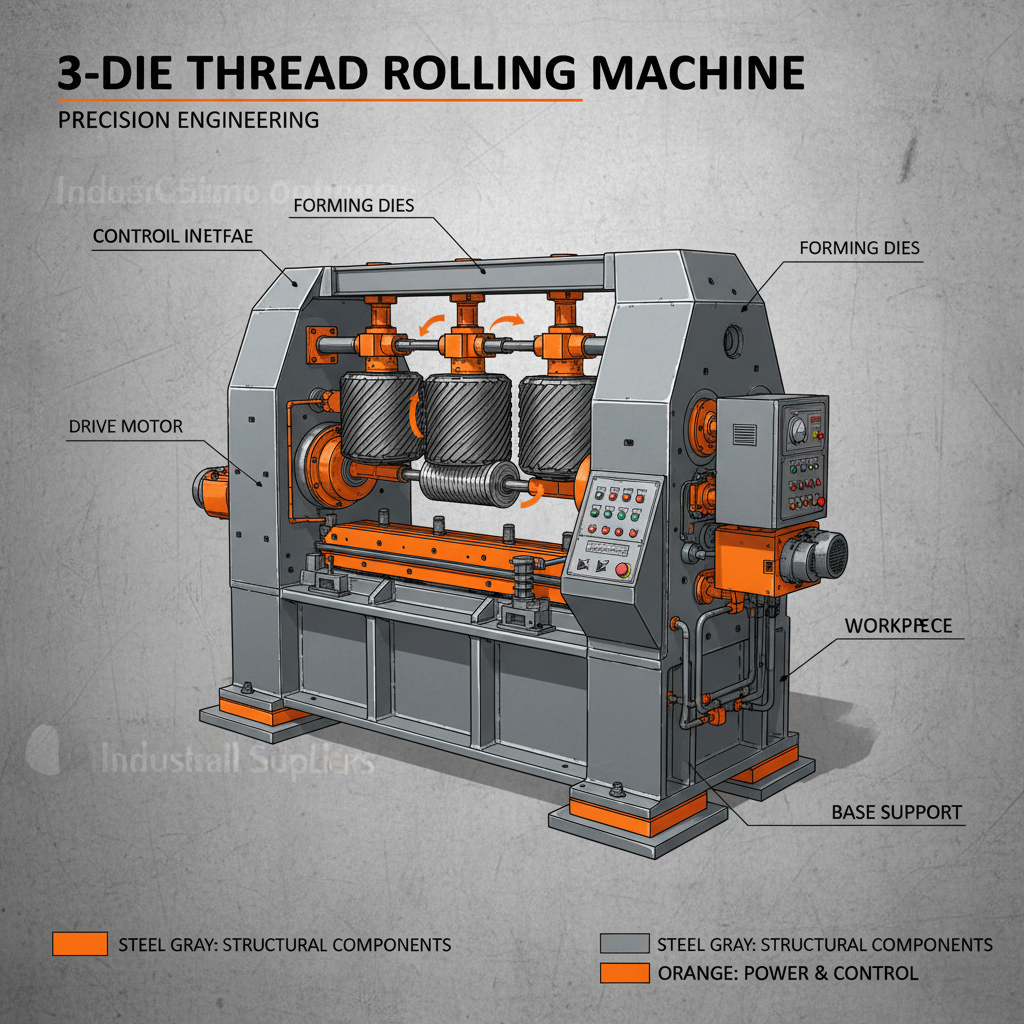
The 3-die configuration is widely regarded as the gold standard for high-precision threading. Unlike 2-die systems, the 3-die setup provides superior stability by centering the workpiece more effectively, which significantly reduces the risk of eccentricity or "wobble" during the rolling process. This stability is essential when producing high-tensile bolts and screws that must meet strict ISO or ASME standards. When browsing 3 die thread rolling machine suppliers, you will find that these machines offer better consistency across large batches, reducing waste and minimizing the need for secondary inspections.
Technical Insight: Thread rolling improves the grain structure of the metal by flowing the fibers rather than cutting them, which increases the fatigue strength of the fastener by up to 30% compared to traditional threading methods.
Evaluating 3 Die Thread Rolling Machine Suppliers: Key Criteria
Not all suppliers provide the same level of value. To identify the most reliable 3 die thread rolling machine suppliers, you must look beyond the initial price tag. Consider the quality of the alloys used in the machine's frame and the precision of the gearing systems. A top-tier supplier will offer comprehensive technical documentation, a transparent warranty policy, and a proven track record of after-sales support. Furthermore, the ability to provide customized tooling (dies) tailored to your specific thread pitch and diameter is a hallmark of a professional supplier.
Technical Specifications: Comparing Machine Performance
When comparing different models from various 3 die thread rolling machine suppliers, it is helpful to look at a side-by-side technical comparison. The choice between a manual, semi-automatic, or fully CNC-controlled machine depends on your production volume and the variety of parts you manufacture. High-performance machines typically feature hardened guide rails and optimized lubrication systems to extend die life.
Maximizing ROI with Equipment from Professional Suppliers
Investing in hardware from reputable 3 die thread rolling machine suppliers can significantly lower your total cost of ownership. High-quality machines reduce the frequency of downtime caused by mechanical failure and lower the scrap rate through precise tolerance control. To maximize your return on investment, focus on suppliers who provide training for your operators. Proper machine setup and die maintenance are just as important as the machine's specifications themselves.
Application Scope and Versatility of 3-Die Machines
The versatility offered by leading 3 die thread rolling machine suppliers allows these machines to be used across various sectors. From automotive fasteners and aerospace components to heavy-duty construction bolts, the 3-die system handles various materials including carbon steel, alloy steel, and stainless steel. The ability to switch dies quickly allows a single machine to handle multiple product lines, making it an essential tool for shops that offer custom machining services or small-batch specialty production.
Common Applications:
• Automotive engine bolts and chassis fasteners
• High-strength structural bolts for construction
• Precision surgical screws and medical implants
• Specialized aerospace fasteners for extreme environments
Conclusion: Choosing the Right Partner for Thread Rolling
The decision of which 3 die thread rolling machine suppliers to trust can determine the quality of your output and the efficiency of your workshop. By focusing on precision, stability, and long-term support, you ensure that your manufacturing process remains competitive in a demanding global market. Investing in premium equipment from a professional supplier is not just a purchase—it is a strategic move toward higher productivity and uncompromising quality.
Frequently Asked Questions (FAQs)
What is the primary advantage of 3-die machines over 2-die machines?
The primary advantage is the enhanced centering of the workpiece. In a 3-die system, the workpiece is supported from three points, which drastically reduces the chance of the part tilting or shifting during the rolling process. This results in a much higher degree of concentricity and thread accuracy. For manufacturers producing high-precision components, this prevents a significant amount of waste and ensures that every part meets the required geometric tolerances, which is why most professional 3 die thread rolling machine suppliers recommend this setup for industrial-grade production.
How often should the dies be replaced in a 3-die thread rolling machine?
Die lifespan varies based on the material being rolled and the volume of production. However, dies should be inspected daily for wear, pitting, or cracks. Generally, high-quality dies from reputable suppliers can last for hundreds of thousands of cycles. We recommend monitoring the thread quality using a go/no-go gauge; as soon as the tolerance begins to drift toward the limit, the dies should be reground or replaced. Regular lubrication is the most effective way to extend the life of your tooling and reduce the frequency of replacement.
Can 3-die machines handle stainless steel?
Yes, 3-die machines are highly capable of rolling stainless steel, but it requires specific considerations. Stainless steel is harder and has a higher tendency to work-harden than carbon steel. Therefore, it requires dies made from high-grade tungsten carbide or specialized tool steels and a more robust machine frame to handle the higher pressures. When contacting 3 die thread rolling machine suppliers, be sure to specify the grade of stainless steel you are using so they can recommend a machine with the appropriate torque and tooling capabilities.
What maintenance is required for these machines?
Essential maintenance includes daily lubrication of the sliding surfaces and gears to prevent friction wear. Weekly checks should be performed on the tension of the drive belts and the alignment of the dies. Monthly, it is advisable to inspect the electrical components and the hydraulic systems (if applicable) for leaks or degradation. Keeping the machine free of metal shavings and coolant sludge also prevents premature wear on the precision guide rails. Following a strict maintenance schedule provided by your supplier will ensure the machine operates at peak efficiency for decades.