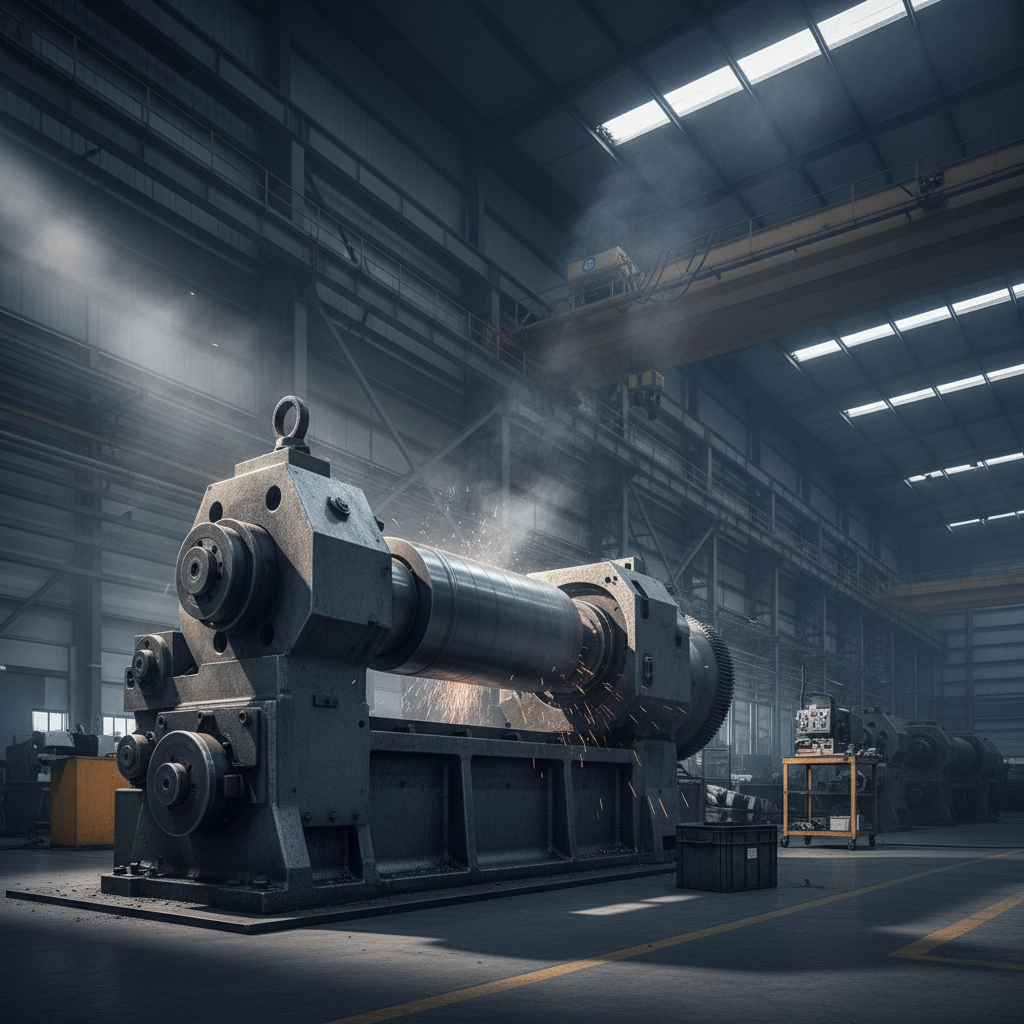
Cold forming technology has fundamentally shifted how fasteners and mechanical components are produced, moving away from material-removing processes toward displacement-based forming. Among these, the ability to produce threads with extreme precision and speed is a critical bottleneck for high-volume automotive and construction suppliers.
The transition to high-speed operations requires more than just faster motors; it demands a synchronization of intelligent control, structural rigidity, and customized die geometry to prevent tool wear and maintain dimensional stability. Many manufacturers now struggle to balance the trade-off between cycle time and the surface gloss required for high-end mechanical parts.
Selecting a custom high speed thread rolling machine involves analyzing the specific mechanical requirements of the workpiece—such as thread pitch, material hardness, and required tolerance—to ensure the equipment can sustain peak output without compromising quality.


Unlike traditional cutting or turning, thread rolling uses high-pressure dies to displace metal, creating threads through plastic deformation. This process aligns the grain structure of the metal, which significantly increases the fatigue strength of the resulting thread compared to those produced by subtraction.
In a high-speed context, the machine must manage immense pressure while maintaining precise rotational synchronization. Customization of the die angle and the rolling speed is essential to prevent material overheating and to ensure that the deformation is uniform across the entire length of the part.
Precision in high-speed rolling is primarily dictated by the rigidity of the machine frame and the accuracy of the spindle alignment. Any micro-vibration at high RPMs can lead to pitch errors or inconsistent thread depths, which are unacceptable in aerospace or automotive drivetrain components.
The use of intelligent control panels allows for real-time adjustments of the feed rate and pressure. By optimizing these variables, operators can maintain tighter tolerances even as the dies begin to wear. This shift from manual adjustment to digital precision reduces scrap rates and ensures batch-to-batch consistency.
Furthermore, the material properties of the workpiece play a huge role. Harder alloys require higher rolling pressures and more robust machine specifications, such as those found in the ZA28 Series, to ensure the metal flows correctly into the die cavities without fracturing.
Surface finish is often a primary indicator of a thread rolling machine's quality. A high-gloss finish is not merely aesthetic; it reduces friction during assembly and minimizes the potential for stress corrosion cracking in harsh environments.
High surface gloss in rolled threads is achieved when the dies perfectly compress the material surface, eliminating the microscopic peaks and valleys typically left by cutting tools.
For engineering threads used in scaffolding or mechanical parts, achieving this level of finish requires a combination of precision-ground dies and a stable rolling speed. When the speed is too low, the surface may appear dull; when too high without proper lubrication, the material can gall, ruining the finish.
Evaluating the efficiency of a thread rolling operation requires looking beyond simple parts-per-hour. One must consider the setup time, die changeover speed, and the energy consumption per unit. Customization of the machine specifications allows manufacturers to align the equipment's power output with the actual needs of the production run.
By analyzing the relative performance of different machine configurations, we can see how the integration of intelligent controls impacts overall throughput and quality stability across different product types.
In a typical industrial setting, such as the production of auto parts, the demand for high-strength threads is paramount. High-speed rolling is employed to create bolts and studs that can withstand extreme vibrational stress without loosening or shearing. The ability to customize the machine to specific thread profiles allows for the creation of non-standard threads used in proprietary mechanical assemblies.
Beyond automotive, the construction sector relies on this technology for scaffolding components. These parts require a balance of high production speed and strict adherence to safety standards. Utilizing a 2-axis system ensures that the threads are rolled with a high degree of concentricity, ensuring a secure fit in critical structural joints.
The industry is moving away from purely mechanical adjustment toward software-defined machining. The introduction of intelligent control panels has transformed the operator's role from a manual technician to a system manager. This transition allows for the precise synchronization of the rolling dies and the workpiece feed, reducing human error.
One of the most significant advancements is the ability to program different product specifications into the machine, allowing for rapid changeovers. This is particularly valuable for shops that handle a wide variety of small-batch custom orders alongside high-volume production.
Future developments are likely to focus on predictive maintenance, where sensors detect tool wear before it affects part quality. By integrating data analytics into the control system, machines can alert operators exactly when a die needs replacement, eliminating unplanned downtime.
Choosing the right equipment requires a rigorous evaluation of the intended application. A common mistake is over-specifying the machine speed without considering the material's deformation limits, which can lead to premature tool failure.
Manufacturers should assess the trade-off between initial capital expenditure and long-term operational costs. For instance, while a basic machine may be cheaper, an intelligent system often pays for itself through reduced scrap rates and lower labor costs.
The following framework provides a relative assessment of different equipment categories based on typical industrial requirements.
| Selection Factor | Standard 2-Axis | High-Speed Custom | Automated Series |
|---|---|---|---|
| Production Volume | Low to Medium | High | Ultra-High |
| Precision Level | Standard | High | Extreme |
| Setup Flexibility | Manual/Slow | Moderate/Fast | Programmable |
| Surface Finish | Matte to Semi-Gloss | High Gloss | Mirror-Like |
| Material Range | Soft to Medium Steel | Broad Alloy Range | Specialized Alloys |
| Operational Cost | Moderate | Low (per unit) | Lowest (at scale) |
Thread rolling is a cold-forming process that displaces metal to create threads, whereas cutting removes material. Rolling results in a stronger thread because it preserves the grain flow of the metal and increases surface hardness through work hardening. It is also significantly faster and produces no waste chips, making it more sustainable and cost-effective for high-volume production.
High-speed machines, when properly calibrated with intelligent controls, apply a consistent and immense pressure that smooths the material surface. This creates a high-gloss finish by eliminating microscopic irregularities. However, the speed must be balanced with appropriate lubrication to prevent friction-induced overheating, which would otherwise dull the surface or cause material tearing.
Industries requiring high-strength, high-precision fasteners at scale benefit most. This includes the automotive sector (engine bolts, suspension parts), the construction industry (scaffolding, structural anchors), and general mechanical engineering. These sectors prioritize the fatigue resistance and dimensional accuracy that only a high-speed rolling process can provide consistently.
Yes, customization is a core aspect of professional equipment. By adjusting the die geometry and the machine's feed ratios, it is possible to produce specialized threads. Equipment like the Type 200 or ZA28 series allows for customized specifications to meet specific engineering drawings, ensuring the machine matches the exact pitch and diameter required for a particular project.
The primary focus should be on die wear and lubrication systems. Because high-speed rolling involves intense pressure and friction, the dies must be inspected regularly for deformation. Ensuring the lubrication system is functioning perfectly is critical to prevent galling and to maintain the surface gloss of the finished parts. Additionally, spindle alignment should be checked periodically to avoid pitch errors.
Intelligent panels reduce costs by minimizing human error and scrap. They allow for faster setup times through digital presets and provide more consistent pressure control, which extends the life of the dies. By optimizing the cycle time and ensuring a higher percentage of first-pass quality parts, the cost per unit is significantly lowered compared to manual systems.
The transition toward high-speed, customized thread rolling represents a broader industry move toward efficiency and material optimization. For manufacturers in the automotive and construction sectors, the ability to produce high-strength, high-gloss threads at scale is no longer an advantage but a necessity for remaining competitive in a global market.
By focusing on the synergy between machine rigidity, intelligent control, and customized tool design, companies can achieve a level of precision that traditional methods cannot match. Investing in the right equipment is not just about increasing speed, but about ensuring the long-term structural integrity and quality of every single component produced.