

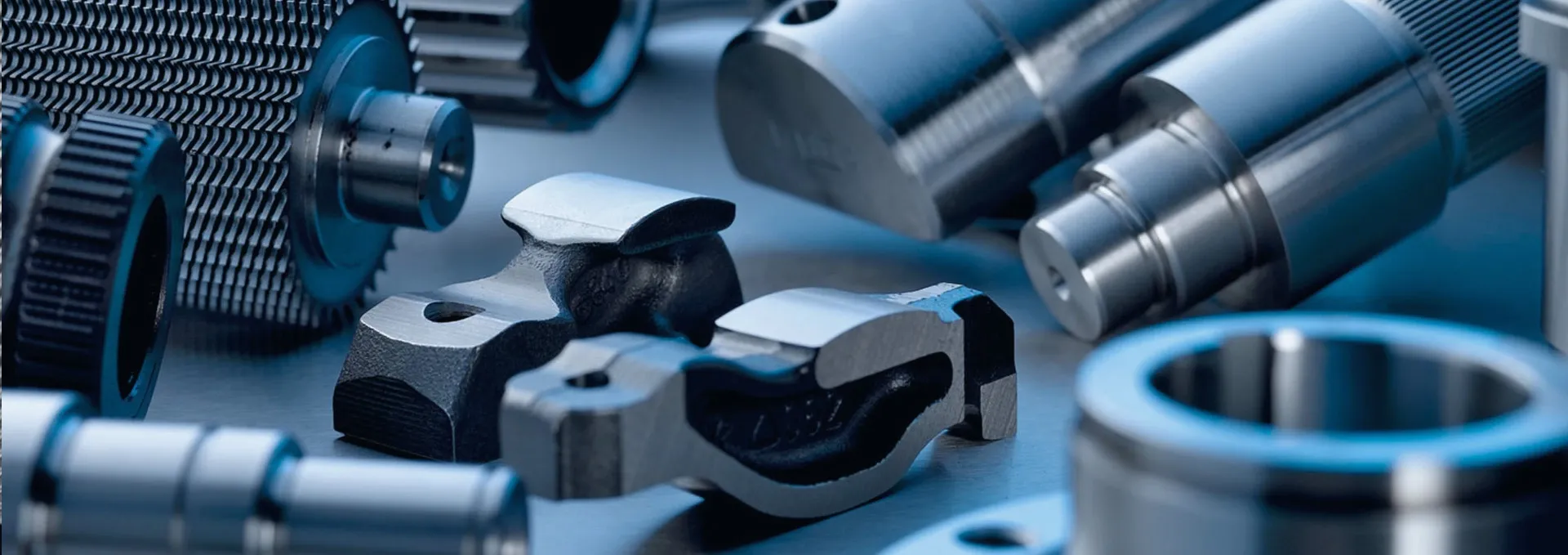
Precision Roll Thread Machine: Efficient & Durable Threading Solutions
Industry Trends and the Evolution of Thread Rolling Technology
The global manufacturing sector is undergoing significant transformation, driven by demands for higher precision, efficiency, and sustainability. In the realm of fastening and construction, the ability to produce robust, consistent threaded components is paramount. This is where advanced thread rolling technology, particularly the roll thread machine, plays a critical role. We are witnessing a pronounced shift towards automated, high-speed systems that minimize material waste and enhance the structural integrity of components.
Current industry trends emphasize intelligent manufacturing, incorporating features such as IoT connectivity, predictive maintenance, and adaptive control systems into machinery. For applications involving steel bar thread rolling, there is a growing need for machines that can handle diverse material specifications and produce threads conforming to international standards like ISO and ASTM with impeccable accuracy. The market for sophisticated thread rolling solutions, including specialized steel bar thread rolling machine models, is expanding, propelled by large-scale infrastructure projects and advancements in industrial fabrication.
Furthermore, the demand for energy-efficient machinery that reduces operational costs and environmental impact is steering innovation. Manufacturers are investing in technologies that offer superior thread quality, reduced cycle times, and enhanced machine longevity, thereby providing a competitive edge. This commitment to innovation ensures that advanced thread rolling solutions remain a cornerstone of modern industrial production.
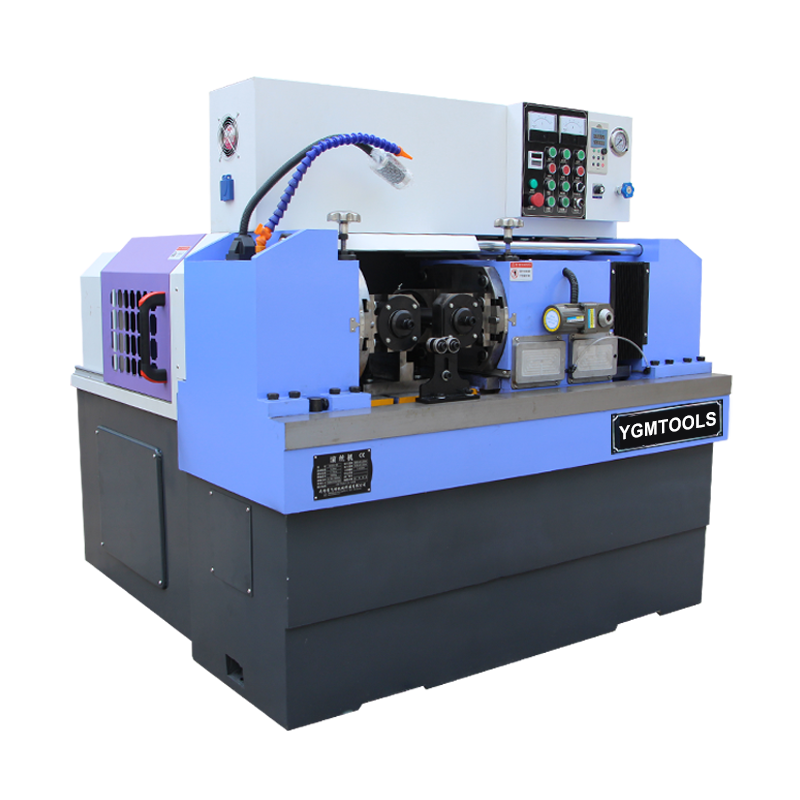
Technical Specifications of Automatic Rebar Spoke Thread Rolling Machines
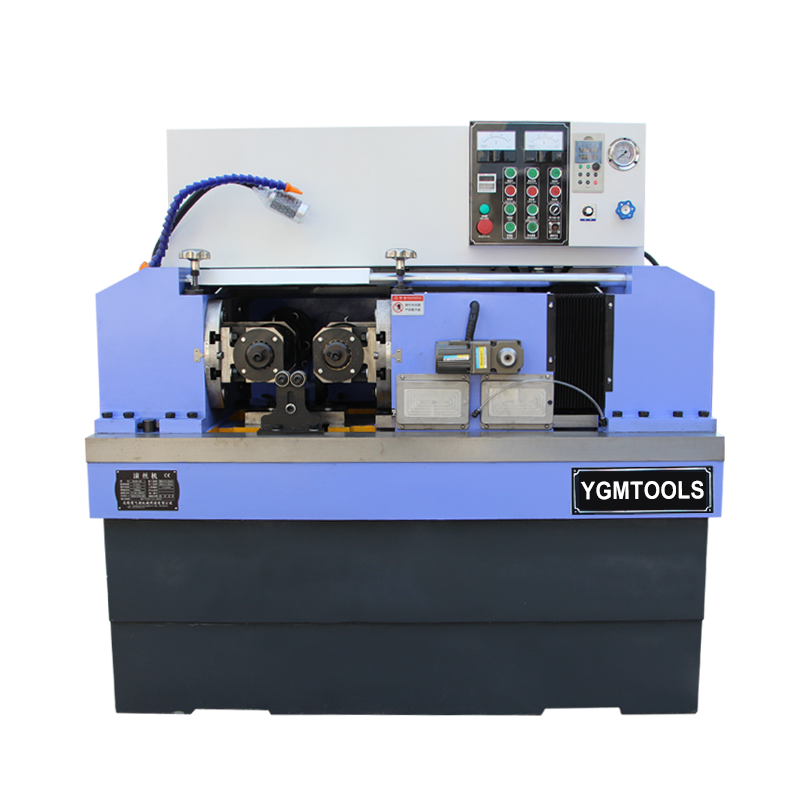
The Automatic Rebar Spoke Thread Rolling Machine represents the pinnacle of precision engineering for creating robust, high-strength threads on steel bars. These machines are engineered for continuous operation, providing consistent quality and high output. Key technical specifications dictate their performance and suitability for various industrial applications. Understanding these parameters is crucial for B2B decision-makers considering to buy steel bar thread rolling machine solutions.
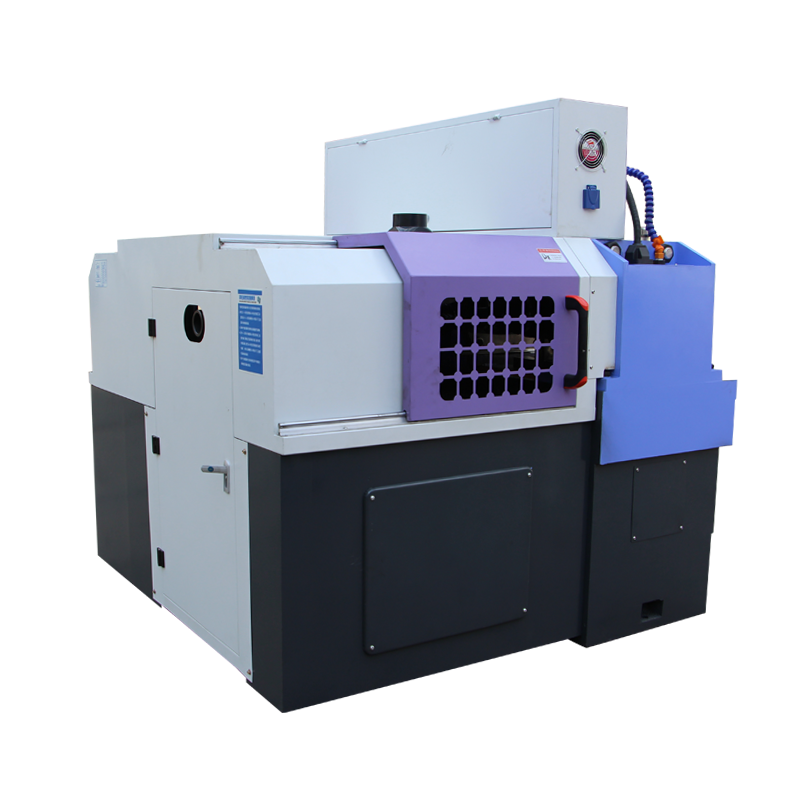
A typical roll thread machine for rebar applications is designed with a sturdy frame, often constructed from high-grade, vibration-dampening cast iron or reinforced steel, ensuring stability and accuracy during high-pressure rolling operations. The hydraulic or servo-driven systems provide precise control over the rolling dies, which are manufactured from special tool steels, heat-treated for exceptional hardness and wear resistance.
Product Specification Table: Automatic Rebar Spoke Thread Rolling Machine
| Parameter | Specification |
|---|---|
| Applicable Rebar Diameter | 16 mm - 40 mm (varies by model) |
| Thread Pitch Range | 2.0 mm - 5.0 mm (standard metric) |
| Max. Thread Length | 100 mm - 200 mm (customizable) |
| Motor Power | 4.0 kW - 7.5 kW (3-Phase) |
| Operating Pressure | Up to 15 MPa (Hydraulic) |
| Machine Weight | 500 kg - 1200 kg |
| Rolling Speed | 15-20 seconds/piece (approx.) |
| Cooling System | Integrated oil cooling for dies and workpiece |
| Control System | PLC-based with HMI (Human Machine Interface) |
| Compliance | ISO 9001:2015, CE Certified |
These machines typically incorporate advanced sensors for automated feeding and precise thread formation, reducing human intervention and ensuring consistent quality. The use of high-quality alloy steels for critical components ensures extended service life, often exceeding 10 years with proper maintenance, even in demanding industrial environments.
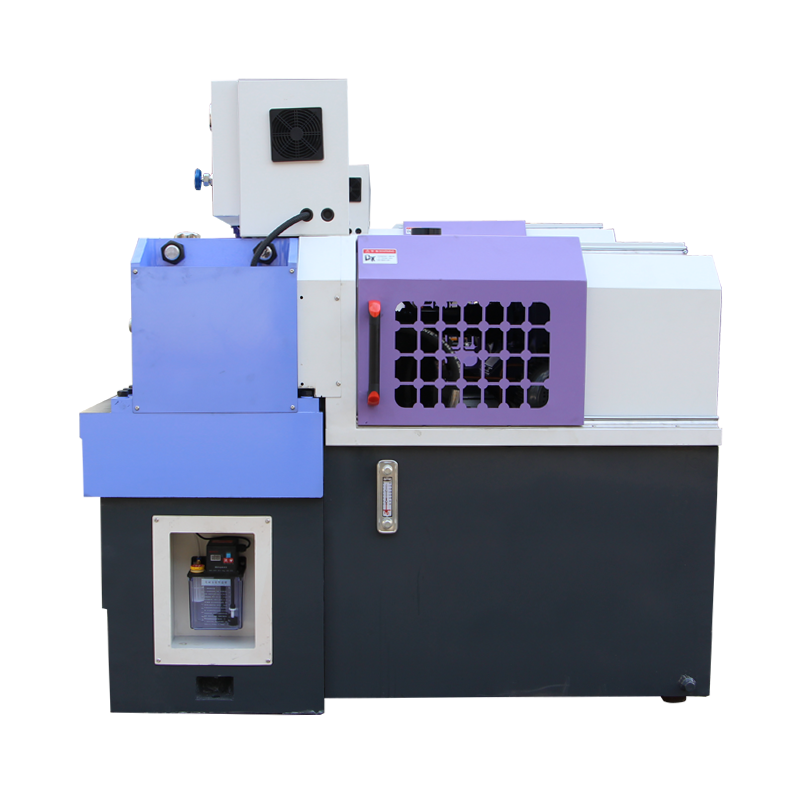
Detailed Manufacturing Process of a Roll Thread Machine
The manufacturing of a high-performance roll thread machine is a meticulous process, combining robust material selection with advanced fabrication techniques. The goal is to produce a machine capable of exerting immense pressure with pinpoint accuracy over millions of cycles.
Process Flow: From Raw Material to Finished Machine
- Material Procurement & Initial Processing: High-grade structural steel (e.g., Q345B, S355J2) and specialized tool steels (e.g., H13, D2 for dies) are sourced. Major structural components often undergo casting or forging processes to achieve initial rough shapes and enhance material density and strength. For example, machine bases might be sand-casted from ductile iron for vibration dampening.
- Precision Machining (CNC): All critical components, including the machine frame, rolling shafts, gearboxes, and hydraulic manifold blocks, are then subjected to CNC machining. This ensures micron-level tolerances for mating surfaces, bearing seats, and alignment points. CNC lathes, milling machines, and grinding machines are used extensively.
- Heat Treatment & Surface Finishing: Components requiring high wear resistance (e.g., rolling dies, gears, shafts) undergo specialized heat treatments like carburizing, nitriding, or induction hardening. This enhances surface hardness while maintaining a tough core. Surface finishing techniques such as grinding, honing, and polishing are applied to reduce friction and improve component lifespan.
- Assembly & Integration: The machine is assembled in stages. This includes mounting the main frame, installing hydraulic and electrical systems, integrating the PLC control unit, and aligning precision mechanical components. Bearings, seals, and fasteners conforming to ISO/ANSI standards are used throughout.
-
Calibration & Testing: Each machine undergoes rigorous testing. This includes:
- Dimensional Accuracy Testing: Verifying all critical dimensions against design specifications using CMM (Coordinate Measuring Machine) and precision gauges.
- Functional Testing: Running the machine under no-load and full-load conditions, simulating various rebar diameters and materials.
- Thread Quality Testing: Producing sample threads and inspecting them for pitch accuracy, profile conformity, surface finish, and tensile strength (e.g., using thread gauges, optical comparators).
- Electrical & Hydraulic System Checks: Ensuring all safety interlocks, pressure settings, and electrical connections comply with relevant safety standards.
- Final Inspection & Certification: A comprehensive final inspection verifies all aspects of the machine. Certifications such as CE and ISO 9001:2015 confirm adherence to international quality and safety standards.
The emphasis on high-quality materials, precision machining, and stringent testing ensures a service life often exceeding 10 years for core mechanical components, with routine maintenance. These machines are designed for demanding environments found in target industries such as petrochemical, metallurgy, and water supply & drainage infrastructure, where robustness and reliability are non-negotiable.
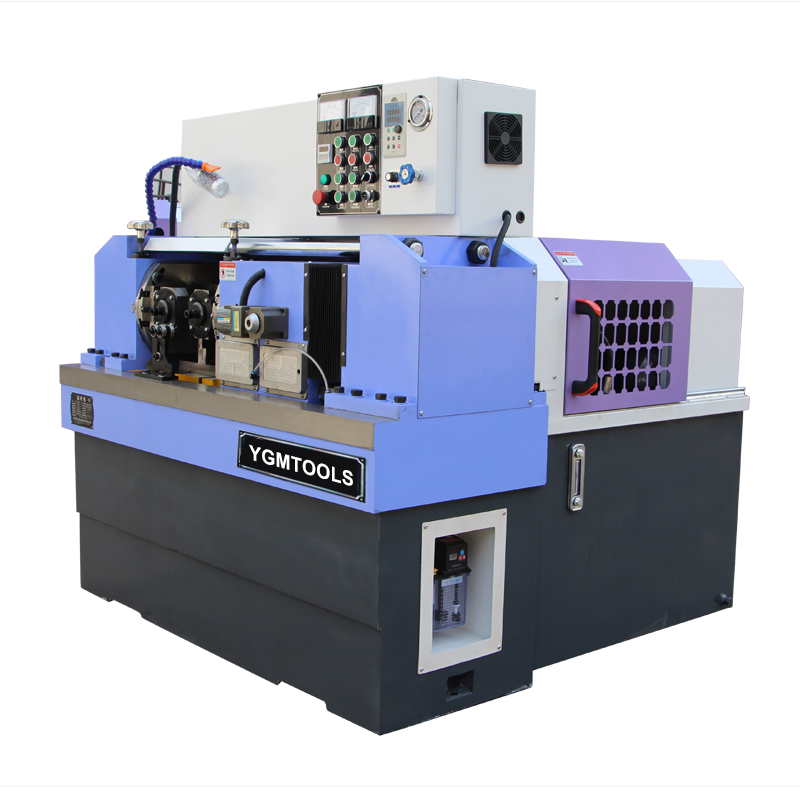
Application Scenarios and Technical Advantages
The versatility and robust performance of automatic rebar thread rolling machines make them indispensable across a wide array of heavy industries. These machines are specifically engineered to produce high-strength threads on various types of steel bars, critical for structural integrity and secure fastening.
Target Industries:
- Construction and Infrastructure: Essential for connecting rebar in high-rise buildings, bridges, tunnels, and dams, ensuring structural continuity and seismic resistance.
- Pre-stressing and Post-tensioning Systems: Used to thread high-strength steel bars for pre-stressed concrete applications, crucial in large-span structures.
- Petrochemical Industry: For threading anchor bolts and structural components requiring corrosion resistance and high load-bearing capacity.
- Metallurgy: Production of threaded rods and fasteners for heavy machinery assembly and furnace construction.
- Water Supply & Drainage Systems: Fabrication of custom threaded components for large pipelines and treatment plant infrastructure.
- Mining and Tunnelling: For rock bolts and ground support systems where quick and reliable thread formation is critical.
Demonstrable Technical Advantages:
- Superior Thread Strength and Integrity: Unlike cut threads, rolled threads are formed by displacing material, not removing it. This process cold-works the material, increasing its tensile strength and fatigue resistance by up to 30%, as material grain flow remains uninterrupted. This is a critical advantage for applications where component failure is not an option.
- Enhanced Corrosion Resistance: The cold-working process compacts the surface, leading to a smoother, harder finish less susceptible to stress corrosion cracking. This is particularly beneficial in corrosive environments common in petrochemical and water treatment industries.
- Material Efficiency and Energy Saving: Thread rolling is a chipless process, meaning no material is wasted as chips, leading to significant material savings. Modern reed thread rolling machines are also designed with efficient hydraulic and motor systems, consuming less power per threaded piece compared to traditional cutting methods, contributing to lower operational costs and a reduced carbon footprint.
- High Production Speed and Consistency: Automated systems can produce threads rapidly and consistently, ensuring uniform quality across thousands of components. This reduces manufacturing time and labor costs, making large-scale projects more viable.
- Improved Surface Finish: The rolling process burnishes the thread surface, resulting in a smoother finish than machined threads, reducing friction and improving fitment with mating components.
Vendor Comparison and Customized Solutions
When sourcing a roll thread machine, a thorough vendor comparison is essential. While many manufacturers offer thread rolling solutions, key differentiators lie in machine robustness, technological advancement, after-sales support, and the ability to provide customized solutions.
Key Considerations for Vendor Selection:
- Technology and Automation: Evaluate the level of automation (PLC control, automatic feeding), integration capabilities (e.g., with existing production lines), and the precision of the rolling process. Leading vendors incorporate advanced servo-hydraulics and diagnostic systems.
- Build Quality and Longevity: Investigate the materials used for the machine frame, gears, and dies. Reputable manufacturers specify high-grade alloy steels and offer robust designs for extended service life in harsh industrial conditions.
- Certifications and Compliance: Ensure the vendor holds relevant quality certifications (e.g., ISO 9001) and that their machines comply with international safety standards (e.g., CE marking).
- Customer Support and Warranty: Assess the vendor's commitment to after-sales service, including spare parts availability, technical support, and the scope of their warranty.
- Customization Capabilities: For specialized applications, the ability to adapt machine parameters, tooling, or automation levels is paramount.
Product Comparison: Generic Rebar Thread Rolling Machine vs. Leading Edge Solutions
| Feature | Generic Machine | Leading Edge Solution (e.g., Automatic Rebar Spoke Thread Rolling Machine) |
|---|---|---|
| Control System | Basic Push-Button, Manual Adjustments | Advanced PLC with HMI, Recipe Management, Diagnostics |
| Automation Level | Manual loading/unloading | Semi-automatic or fully automatic rebar feeding and ejection |
| Thread Quality Consistency | Variable, depends on operator skill | High precision and repeatability (±0.01mm) |
| Energy Efficiency | Standard motor, less optimized | Energy-saving servo motors, optimized hydraulic system |
| Die Life | Standard (e.g., 50,000 threads) | Extended (e.g., 100,000+ threads) due to superior material and cooling |
| Noise Level | Higher (e.g., 85+ dB) | Lower (e.g., |
Customized Solutions:
Recognizing that every industrial application has unique requirements, leading manufacturers offer customized solutions. This can involve:
- Tailored Rebar Diameter & Thread Specifications: Adjusting machine capacity and dies to accommodate non-standard rebar sizes or specific thread profiles (e.g., UNC, UNF, Acme threads).
- Integration with Existing Production Lines: Designing interfaces for seamless integration with upstream cutting or bending machines and downstream sorting or packaging systems.
- Material Handling Solutions: Implementing custom automatic feeding and collection systems for enhanced efficiency and safety.
- Software & Control Enhancements: Developing custom PLC programs for unique operational sequences, data logging, or integration with factory-wide SCADA systems.
- Environmental Adaptations: Special coatings or components for machines operating in extreme temperatures, high humidity, or corrosive atmospheres.
This bespoke approach ensures that clients receive a solution perfectly aligned with their operational needs, maximizing ROI and optimizing production workflows.
Application Case Studies and Customer Experience
Real-world application case studies provide tangible evidence of the performance and reliability of advanced roll thread machine technology. Our commitment to delivering high-quality, efficient solutions has garnered positive feedback and enabled critical infrastructure projects globally.
Case Study 1: Major Bridge Construction Project
A leading infrastructure development firm was constructing a significant cable-stayed bridge requiring thousands of high-strength threaded rebar connectors (25mm and 32mm diameter). Manual threading methods were too slow and inconsistent, posing significant project delays and quality risks. Our Automatic Rebar Spoke Thread Rolling Machine was deployed, integrated with an automated feeding system.
- Outcome: Production speed increased by 40%, reducing the threading bottleneck. Thread quality consistency improved by 98%, meeting stringent structural engineering requirements (e.g., ACI 318). The project achieved completion ahead of schedule, attributing part of the success to the reliable and high-output thread rolling solution.
- Customer Feedback: "The precision and speed of this machine were game-changers for our bridge project. The threads are exceptionally strong, and the machine's uptime has been flawless." - Project Manager, Global Construction Group.
Case Study 2: High-Volume Precast Concrete Plant
A precast concrete manufacturer needed to thread rebar for a new line of modular building components. Their existing friction welding method was costly and prone to creating heat-affected zones in the rebar. They switched to our thread rolling technology to ensure superior mechanical properties and reduce material waste.
- Outcome: Eliminated material wastage associated with friction welding, saving 5% in raw material costs. The cold-formed threads exhibited superior fatigue resistance, enhancing the durability of precast elements. The machine's low power consumption also led to a 15% reduction in energy bills for the threading operation.
- Customer Feedback: "The material savings alone justified the investment. But the enhanced quality of our threaded rebars, without heat-induced weaknesses, is what truly sets this machine apart for our precast applications." - Operations Director, Precast Solutions Inc.
Case Study 3: Custom Threading for Industrial Machinery
A specialized heavy machinery manufacturer required custom-threaded rods for critical linkages and structural supports in their equipment. These rods ranged from 18mm to 36mm and needed specific thread forms for unique coupling mechanisms. We provided a customized roll thread machine with interchangeable dies and a programmable PLC to handle the varying specifications.
- Outcome: The customized machine allowed the client to produce highly specific threaded rods in-house, significantly reducing lead times and dependency on external suppliers. The precision of the threads ensured perfect fitment, reducing assembly errors and improving product reliability.
- Customer Feedback: "The ability to produce our own specialized threaded rods with such accuracy has streamlined our production and improved the quality of our machinery. The support during the customization phase was excellent." - Lead Engineer, Industrial Robotics Co.
Trustworthiness: FAQ, Lead Time, Warranty & Support
Frequently Asked Questions (FAQ)
Q1: What types of rebar can your automatic thread rolling machines process?
A1: Our machines are compatible with various grades of steel rebar, including HRB335, HRB400, HRB500, and equivalent international standards. We can also provide custom dies for specific rebar alloys or diameters.
Q2: How does cold rolling improve thread strength compared to cutting?
A2: Cold rolling forms threads by displacing material, compacting the grain structure, and increasing surface hardness. This uninterrupted grain flow enhances tensile strength, fatigue resistance, and shear strength by up to 30% compared to cut threads, which can introduce stress risers.
Q3: What maintenance is required for the thread rolling machine?
A3: Routine maintenance includes daily checks for oil levels, cleaning of dies and machine parts, and regular lubrication. Annual inspections by qualified technicians are recommended to check hydraulic systems, electrical components, and alignment. A detailed maintenance schedule is provided with each machine.
Q4: Can the machine be integrated into an existing rebar processing line?
A4: Yes, our automatic rebar thread rolling machines are designed for seamless integration. We offer consultation and engineering services to adapt feeding mechanisms, control interfaces, and data exchange protocols to fit your current production setup.
Lead Time and Fulfillment
Standard Automatic Rebar Spoke Thread Rolling Machines typically have a lead time of 4-6 weeks from order confirmation to shipment. For customized solutions, the lead time may vary from 8-12 weeks, depending on the complexity of modifications and specific component sourcing. We work closely with our clients to establish realistic timelines and provide regular updates throughout the manufacturing and delivery process. Global shipping options are available, with comprehensive logistics support to ensure timely and secure delivery.
Warranty Commitments
We stand behind the quality and reliability of our machines. All new Automatic Rebar Spoke Thread Rolling Machines come with a 12-month warranty covering manufacturing defects and major component failures under normal operating conditions. Extended warranty options are available upon request. Our warranty ensures peace of mind and protection for your investment.
Customer Support and After-Sales Service
Our commitment to our clients extends far beyond the sale. We offer comprehensive after-sales support designed to maximize machine uptime and operational efficiency:
- Technical Assistance: Our team of expert technicians is available for remote troubleshooting via phone, email, and video conferencing.
- On-site Support: For complex issues, on-site installation, commissioning, and repair services can be arranged globally.
- Spare Parts Availability: A full inventory of genuine spare parts and consumables (e.g., rolling dies) is maintained to ensure quick dispatch and minimal downtime.
- Training Programs: We provide detailed operational and maintenance training for your personnel, either at our facility or on-site, to ensure proficient use of the machinery.
Conclusion
The Automatic Rebar Spoke Thread Rolling Machine stands as a testament to modern industrial engineering, offering unparalleled precision, efficiency, and durability for critical applications. From enhancing the structural integrity of major infrastructure to optimizing production in high-volume precast operations, this technology provides significant advantages over traditional methods. By embracing advanced features, robust construction, and dedicated support, businesses can achieve superior thread quality, reduce operational costs, and secure a competitive edge in demanding markets.
Investing in a high-quality roll thread machine is an investment in reliability, safety, and long-term operational excellence, ensuring that your threaded components meet the most stringent international standards and perform flawlessly under extreme conditions.
References
- American Concrete Institute (ACI) 318-19, Building Code Requirements for Structural Concrete.
- ISO 9001:2015, Quality management systems – Requirements.
- Machine Design, "Thread Rolling: How to Get a Better Thread for Less Money."
- ASM International, Handbook of Mechanical Alloying.
- Journal of Materials Processing Technology, "Influence of cold rolling parameters on the fatigue life of threaded components."