

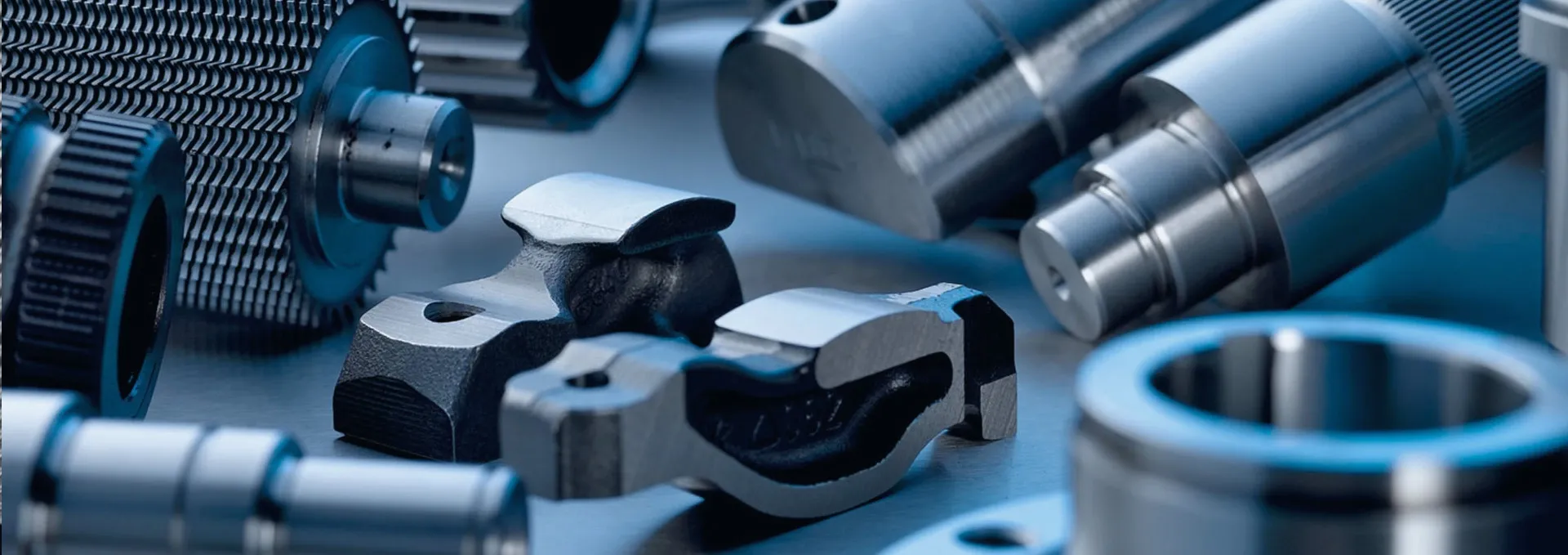
Precision Thread Rolling Tools: High Efficiency & Durability
Industry Trends and the Evolution of Thread Rolling Technology
The global manufacturing landscape is undergoing a significant transformation, driven by an escalating demand for high-precision, high-strength, and durable fasteners across diverse industries. From automotive and aerospace to infrastructure and medical devices, the integrity of threaded components is paramount. This surge in demand necessitates advanced manufacturing techniques that not only ensure superior mechanical properties but also enhance production efficiency and reduce material waste.
In this context, thread rolling technology has emerged as a cornerstone of modern fastener production, offering distinct advantages over traditional thread cutting methods. The market is witnessing a trend towards automated, high-speed machines, such as the thread rolling tool, designed to meet stringent quality requirements and tight tolerances. Innovations in machine design, including the widespread adoption of flat die thread rolling machine and hydraulic thread rolling machine systems, are enabling faster setup times, greater versatility in material processing, and enhanced operational stability. Furthermore, the development of more compact and energy-efficient solutions, exemplified by the small thread rolling machine, is broadening the accessibility of this technology to specialized workshops and smaller-scale productions.
Manufacturers are increasingly prioritizing equipment that delivers repeatable precision, minimizes downtime, and integrates seamlessly into Industry 4.0 environments. The focus is shifting towards smart machines equipped with advanced sensor technology and predictive maintenance capabilities, ensuring optimal performance and extended service life for critical tooling components like the thread rolling tool itself.
Manufacturing Process of a High-Performance Thread Rolling Tool
The creation of a robust and durable thread rolling tool is a sophisticated multi-stage process, meticulously engineered to ensure exceptional precision, longevity, and performance under rigorous industrial conditions. The quality of the tool directly impacts the integrity and mechanical properties of the final threaded product.
Key Process Steps:
- Material Selection & Preparation: High-grade tool steels, predominantly D2, M2 (High-Speed Steel), or specialized cold work steels, are selected for their exceptional hardness, wear resistance, and toughness. These materials undergo stringent metallurgical inspection to verify composition and internal structure, often using spectral analysis and ultrasonic testing.
- Forging & Rough Machining: The raw material is forged to approximate shape, enhancing grain structure and eliminating potential internal defects. This is followed by initial rough machining (turning, milling) to remove excess material and prepare for precision operations.
- CNC Machining of Thread Profile: Using advanced 5-axis CNC machining centers, the intricate thread profile is precision-milled onto the die blanks. This stage requires meticulous control over cutting parameters to achieve the exact lead angle, thread form (e.g., M, UNC, UNF, ACME), and pitch diameter specified by ISO 2901 or ANSI B1.1 standards. Surface roughness is critically monitored.
- Heat Treatment: A multi-stage heat treatment process is crucial. This typically involves hardening (quenching) to achieve specified Rockwell hardness (e.g., HRC 60-64 for D2 steel), followed by tempering to enhance toughness and relieve internal stresses, preventing brittleness. Specialized vacuum furnaces ensure precise temperature control and minimize oxidation.
- Precision Grinding & Lapping: Post-heat treatment, the dies undergo high-precision grinding using specialized abrasive wheels. This removes distortions, refines dimensions, and achieves the required surface finish. Lapping may be employed for ultra-fine surface finishes and critical geometries, ensuring optimal material flow during the rolling process.
- Surface Coatings (Optional but Recommended): For extended service life and reduced friction, coatings such as Titanium Nitride (TiN), Titanium Carbonitride (TiCN), or Chromium Nitride (CrN) are applied via PVD (Physical Vapor Deposition) or CVD (Chemical Vapor Deposition). These coatings significantly improve wear resistance, lubricity, and corrosion resistance.
- Final Inspection & Testing: Each thread rolling tool undergoes rigorous final inspection. This includes dimensional verification using optical comparators, CMM (Coordinate Measuring Machine), and profile projectors. Hardness testing, surface roughness measurement, and sometimes even trial rolling on test blanks ensure adherence to ISO 9001 and specific industry performance standards.
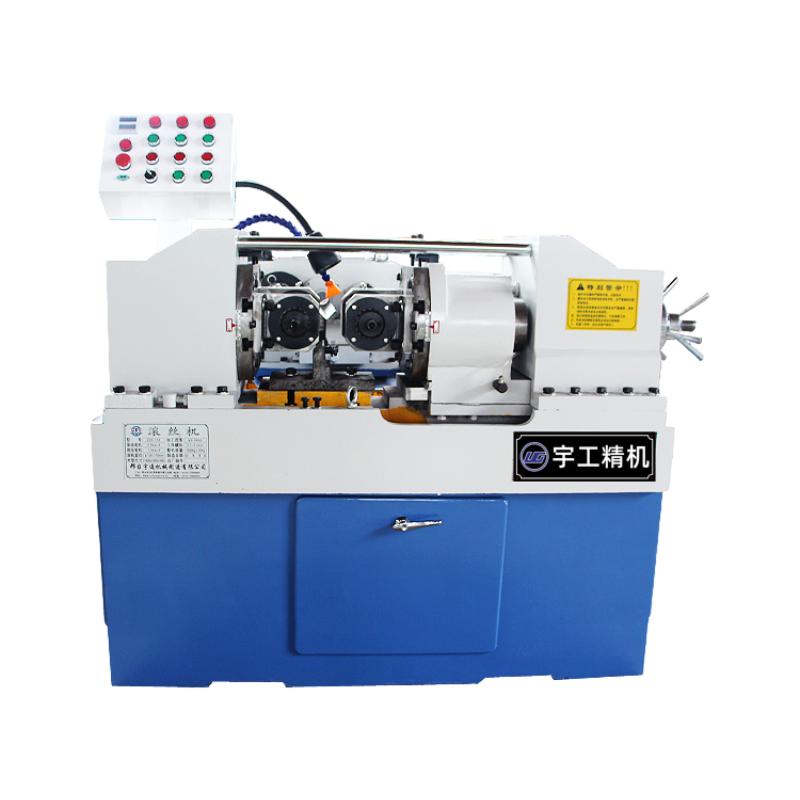
Precision-machined thread rolling dies ready for surface treatment.
The service life of a well-manufactured thread rolling tool can span millions of cycles, depending on the material being rolled, machine parameters, and maintenance. Target industries, including petrochemical, metallurgy, automotive, water supply & drainage, and general manufacturing, benefit from the high-quality threads produced. Advantages include energy saving due to reduced material removal, superior corrosion resistance in the rolled threads due to cold work hardening, and enhanced fatigue strength, critical for high-stress applications.
Technical Specifications & Performance Parameters
Understanding the precise technical specifications of a thread rolling tool and the associated machinery is critical for engineers and procurement specialists. These parameters dictate performance, compatibility, and the quality of the final threaded product.
Typical Specifications for a Thread Rolling Machine (e.g., for Automatic Nut & Bolt Threading)
| Parameter | Specification/Range | Unit/Standard |
|---|---|---|
| Rolling Diameter Range | M3 - M48 (Metric) / 1/8" - 1 3/4" (UNC/UNF) | mm / inch |
| Max. Thread Length | 150 mm (Plunge Rolling) / Unlimited (Through Rolling) | mm |
| Thread Pitch Range | 0.5 - 6.0 mm (Metric) / 4 - 32 TPI (Imperial) | mm / TPI |
| Die Size Range | Diameter 100 - 250 mm, Width 50 - 180 mm | mm |
| Spindle Speed | 20 - 60 RPM (Variable) | RPM |
| Rolling Pressure (Max) | 10 - 30 Tons | Tons |
| Main Motor Power | 7.5 kW - 22 kW | kW |
| Thread Accuracy Class | 6g (ISO), 2A (ANSI) | Standard |
| Surface Roughness (Rolled Thread) | Ra 0.8 - 1.6 µm | µm |
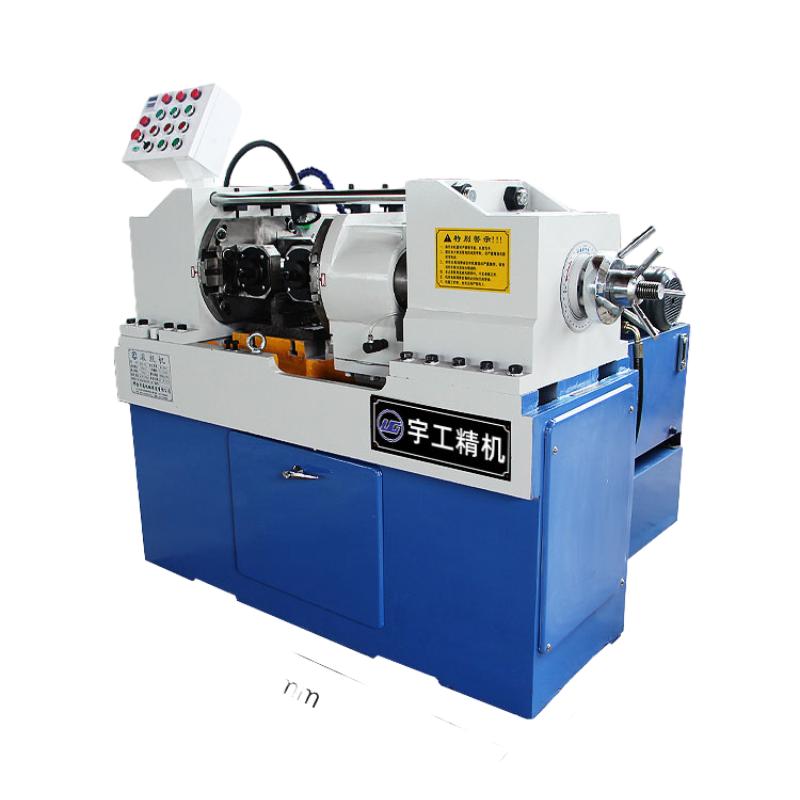
An automatic thread rolling machine in operation, demonstrating high-speed processing.
These specifications highlight the capabilities of modern thread rolling equipment to produce a wide range of threaded components with exceptional dimensional accuracy and surface integrity. The precision achieved through cold forming ensures that the final product adheres to stringent industry standards, making them suitable for critical applications where reliability is non-negotiable.
Diverse Application Scenarios and Technical Advantages
The versatility and inherent advantages of the thread rolling tool have established it as an indispensable technology across a multitude of high-stakes industrial applications. Its ability to impart superior mechanical properties to threaded components makes it the preferred method for critical fasteners.
Key Application Scenarios:
- Automotive Industry: Used for engine bolts, wheel studs, chassis components, and steering linkages where high fatigue resistance and strength are crucial for vehicle safety and performance.
- Aerospace & Defense: Manufacturing of high-strength fasteners for airframe structures, engine assemblies, and control systems, demanding extreme precision, minimal stress concentration, and high fatigue life under varying temperatures and pressures.
- Oil & Gas / Petrochemical: Production of robust studs and bolts for pipeline flanges, valve assemblies, and drilling equipment operating in corrosive environments and under high pressures. The enhanced material integrity from rolling helps prevent stress corrosion cracking.
- Heavy Machinery & Construction: Creation of large diameter bolts for structural connections, earthmoving equipment, and industrial machinery, where load-bearing capacity and vibration resistance are critical. This also extends to rebar threading for concrete reinforcement.
- Medical Devices: Precision threading for orthopedic implants, surgical instruments, and prosthetic components where biocompatibility, high strength-to-weight ratio, and precise fits are paramount.
Technical Advantages of Thread Rolling:
- Enhanced Material Strength & Fatigue Resistance: Cold forming compresses the material’s grain structure, increasing tensile strength, yield strength, and shear strength. This plastic deformation also refines the surface and induces beneficial compressive residual stresses at the thread roots, significantly improving fatigue life compared to cut threads.
- Superior Surface Finish: The rolling process burnishes the thread flanks, resulting in a smooth, work-hardened surface with excellent wear resistance and reduced friction during assembly. This minimizes galling and prolongs service life.
- No Material Removal, Material Savings: Unlike cutting, thread rolling forms the thread by displacing material, not removing it. This conserves raw material, especially critical for expensive alloys, and reduces scrap waste.
- Increased Production Speed & Efficiency: Thread rolling is generally a much faster process than thread cutting, leading to higher throughput and lower per-unit cost in high-volume production.
- Consistent Quality & Repeatability: Once the thread rolling tool and machine are set up, the process delivers highly consistent thread profiles and dimensions, crucial for standardized parts and automated assembly.
- Improved Corrosion Resistance: The refined and densified surface microstructure of rolled threads provides better resistance to environmental corrosion and stress corrosion cracking.
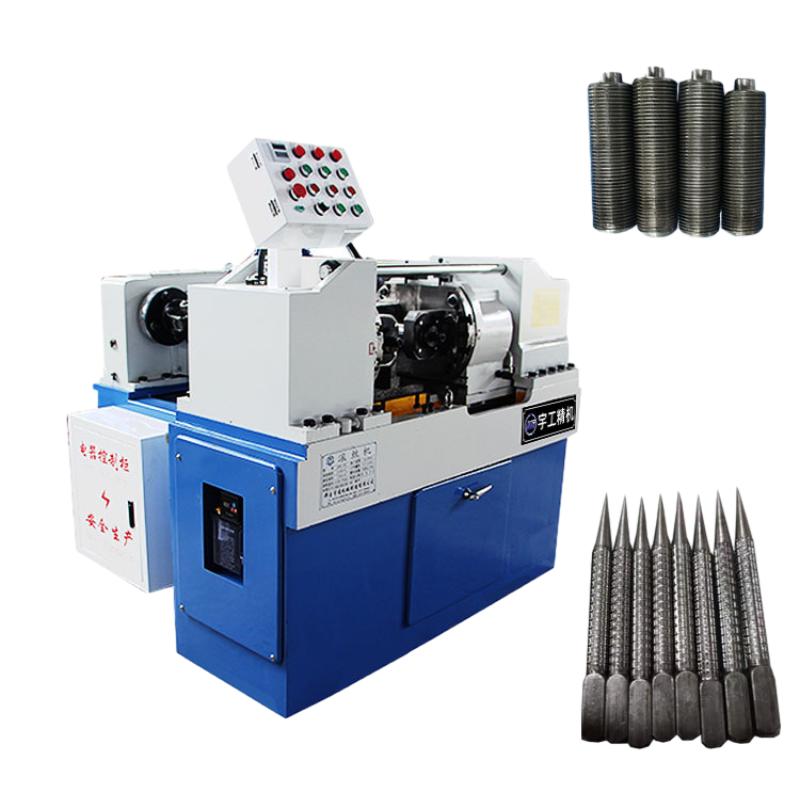
Close-up of a finished threaded rod, showcasing the smooth, precise thread profile achieved by rolling.
Vendor Comparison and Customized Solutions
Selecting the right thread rolling machine and corresponding thread rolling tool is a strategic decision for any B2B operation. A thorough vendor comparison, alongside the availability of customized solutions, can significantly impact long-term operational efficiency and product quality.
Thread Rolling Machine Comparison
| Feature/Machine Type | Flat Die Thread Rolling Machine | Hydraulic Thread Rolling Machine | Small Thread Rolling Machine | Advanced CNC (e.g., Motetools) |
|---|---|---|---|---|
| Operation Principle | Reciprocating dies | Hydraulic power for rolling force | Compact, often mechanical | Servo-driven, precision control |
| Suitable for Diameter | Medium to Large (M6 - M50) | Small to Very Large (M3 - M100+) | Small (M2 - M20) | Wide Range (M3 - M60) with high precision |
| Thread Profiles | Standard Metric, UNC, UNF | Complex, ACME, Worm, Fine Pitch | Standard Metric, Fine Pitch | All standard & custom profiles, highest accuracy |
| Production Volume | High Volume (e.g., bolts) | Medium to High, large parts | Low to Medium, prototyping | Very High Volume, lights-out manufacturing |
| Control System | Mechanical, sometimes PLC | Hydraulic + PLC | Manual / Basic Electrical | Advanced CNC, HMI, remote diagnostics |
| Cost-Effectiveness | High (for specific applications) | Moderate to High | Entry-level, niche applications | Optimized TCO due to efficiency & precision |
When evaluating vendors, B2B decision-makers should consider not only initial machine cost but also total cost of ownership (TCO), including tool life, energy consumption, maintenance, and the vendor's commitment to after-sales support. A reputable vendor, such as Motetools, typically offers a comprehensive portfolio designed to meet varied production needs, from standard fasteners to highly specialized components.
Customized Thread Rolling Solutions
The demand for bespoke threaded components is growing, particularly in advanced manufacturing sectors. Leading providers understand that a "one-size-fits-all" approach is insufficient for complex applications. Customized solutions often involve:
- Specialized Thread Profiles: Development of unique thread forms for specific sealing, locking, or load-bearing requirements.
- Exotic Materials Compatibility: Expertise in rolling threads on challenging materials like titanium alloys, superalloys, or high-strength stainless steels.
- Integrated Automation: Designing machine-tool interfaces for seamless integration into existing automated production lines, including robotic loading/unloading and in-process gauging.
- Optimized Tooling Design: Engineering custom thread rolling tool designs to maximize tool life, minimize setup time, and achieve specific surface finishes or hardness profiles.
Application Case Studies & Proven Expertise
Our commitment to excellence is reflected in the tangible results achieved by our clients. With decades of expertise in precision engineering and manufacturing, our solutions, including the advanced thread rolling tool systems, consistently deliver superior performance and reliability. Our operations adhere strictly to ISO 9001 quality management standards, ensuring every product meets global benchmarks.
Case Study 1: Automotive Fastener Production
- Client: A Tier 1 automotive supplier specializing in high-strength engine components.
- Challenge: To produce millions of connecting rod bolts annually, requiring exceptional fatigue strength and precise dimensional control, while reducing manufacturing costs. Traditional cutting methods resulted in stress risers and inconsistent fatigue life.
- Solution: Implementation of a high-speed, fully automated hydraulic thread rolling machine equipped with custom-designed thread rolling tool dies made from special cold work steel.
- Results:
- Fatigue Life Improvement: Over 30% increase in fatigue strength compared to cut threads, as validated by internal client testing and third-party lab analysis (e.g., 10^7 cycles at 80% yield strength).
- Production Efficiency: 40% reduction in cycle time, leading to a 25% increase in annual production capacity.
- Cost Savings: 15% reduction in material waste and an extended thread rolling tool life (averaging 1.5 million parts per set), significantly lowering tooling costs.
- Quality Consistency: Achieved zero defects related to thread integrity over a 12-month production period, meeting stringent PPAP requirements.
Case Study 2: Infrastructure Rebar Threading for High-Rise Construction
- Client: A leading construction materials supplier for major infrastructure projects.
- Challenge: To provide high-strength threaded rebar connectors for seismic-resistant high-rise buildings, requiring robust, consistent threads on large diameter (e.g., 32mm - 50mm) rebar sections. Traditional welding was costly and time-consuming.
- Solution: Deployed a specialized flat die thread rolling machine optimized for rebar applications, utilizing heavy-duty thread rolling tool dies engineered for high-tensile steel.
- Results:
- Structural Integrity: Rolled rebar threads consistently exceeded pull-out strength requirements by 20% compared to equivalent welded connections, verified by independent structural engineers.
- Project Acceleration: 50% faster installation of rebar connections on-site due to precise, repeatable threads and elimination of welding steps.
- Safety & Compliance: Reduced on-site hazards by replacing welding with a cold-forming process, ensuring compliance with strict building codes for seismic zones.
- Material Optimization: The cold-forming process for rebar preserves the material's structural integrity, unlike cutting, which can weaken the rebar at critical points.
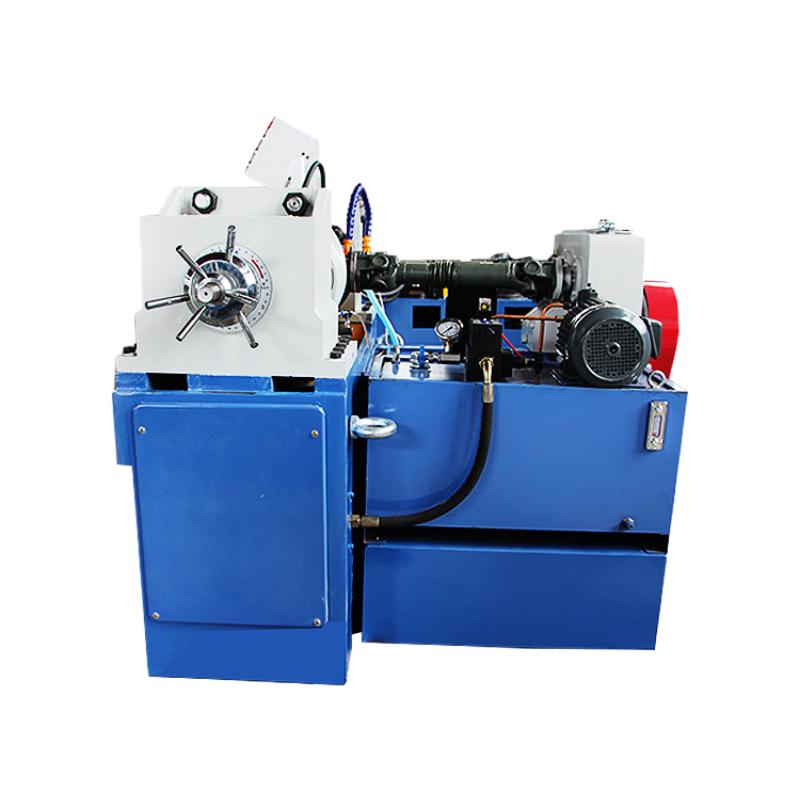
A specialized thread rolling machine designed for large-diameter components, showcasing its robust construction.
Trust and Support: FAQ, Lead Time, Warranty, and Customer Service
At Motetools, building trust and ensuring seamless operations for our B2B partners is paramount. We stand by the quality of our thread rolling tool products and machinery through comprehensive support and clear commitments.
Frequently Asked Questions (FAQ)
-
Q: What materials can your thread rolling machines process?
A: Our machines are designed to process a wide range of materials, including carbon steel, alloy steel, stainless steel, aluminum, brass, and some exotic alloys, depending on the machine model and thread rolling tool specifications. -
Q: How do I select the correct thread rolling dies for my application?
A: Selection depends on several factors: workpiece material, desired thread profile (e.g., M, UNC, UNF, ACME), pitch, diameter, and the type of thread rolling machine (e.g., two-roll, three-roll, planetary). Our technical support team provides expert guidance to ensure optimal die selection. -
Q: What are the main advantages of rolled threads over cut threads?
A: Rolled threads exhibit superior fatigue strength, enhanced surface finish, increased material density, and no material waste. They are also generally more consistent in quality and produced at higher speeds. -
Q: Do you offer training for machine operators and maintenance staff?
A: Yes, we provide comprehensive on-site or remote training programs covering machine operation, preventative maintenance, troubleshooting, and optimal thread rolling tool setup and care.
Lead Time and Fulfillment
Typical lead times for standard thread rolling machines range from 8 to 12 weeks, depending on customization requirements and current production schedules. For highly specialized machines or custom thread rolling tool dies, lead times may extend to 16-20 weeks. We maintain transparent communication throughout the order fulfillment process, providing regular updates from order confirmation to final delivery and installation.
Warranty Commitments
All our thread rolling machines come with a comprehensive 12-month warranty covering parts and labor for manufacturing defects. Extended warranty options are available. Our thread rolling tool dies are warranted against manufacturing defects, with expected service life depending on application and material. Detailed warranty terms are provided with every quotation.
Dedicated Customer Support
Motetools is committed to providing unparalleled after-sales support. Our dedicated technical support team is available via phone, email, and live chat to assist with operational queries, troubleshooting, and spare parts identification. We offer remote diagnostics for our CNC-enabled machines and can dispatch experienced service engineers for on-site support when necessary. Our goal is to minimize downtime and ensure the continuous, efficient operation of your thread rolling equipment.
Conclusion
The strategic integration of advanced thread rolling tool technology and machinery is no longer merely an option but a necessity for B2B enterprises aiming for supremacy in precision manufacturing. The inherent advantages of cold thread forming—including superior material strength, enhanced fatigue resistance, and consistent quality—translate directly into safer, more reliable end-products and more efficient production lines. By investing in state-of-the-art thread rolling solutions, manufacturers can not only meet but exceed the increasingly stringent demands of critical industries, solidifying their competitive edge in a global market that values innovation, reliability, and cost-effectiveness.
References
- ASM Handbook, Volume 14A: Metalworking: Bulk Forming. ASM International, 2005.
- Kalpakjian, S., & Schmid, S. R. Manufacturing Engineering and Technology. 7th ed. Pearson, 2014.
- Fatigue Design of Components: Importance of Residual Stresses. International Journal of Fatigue, 2018.
- Thread Rolling: A State of the Art Review. Journal of Materials Processing Technology, 2010.
- ISO 2901: ISO metric screw threads - Basic profiles - Part 1: General plan. International Organization for Standardization.