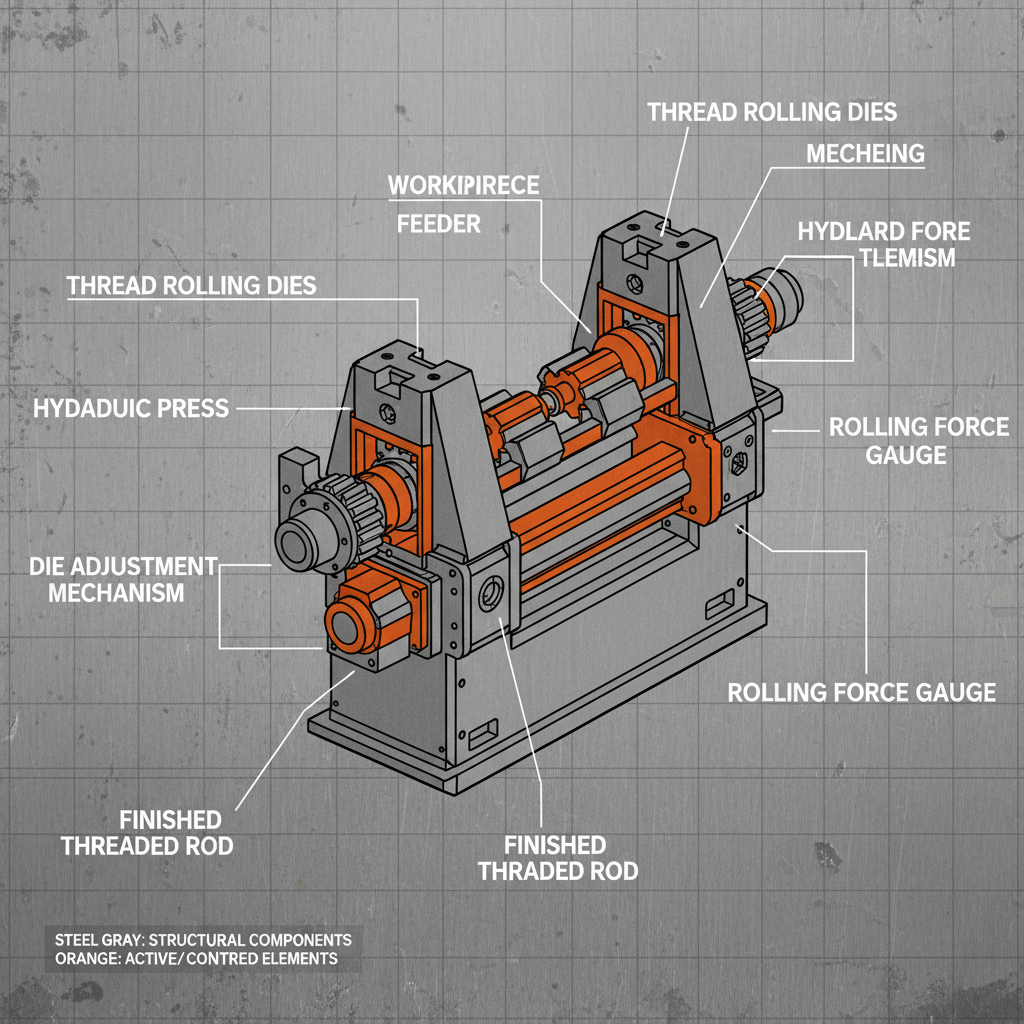
Look, I’ve been running around construction sites for fifteen years now, and let me tell you, things are changing fast. It used to be, if you had a decent wrench and a strong back, you were set. Now? It’s all about efficiency, precision… and whether the damn thing will actually hold up when old man Henderson tries to abuse it. To be honest, the whole thread rolling tool game has gotten a lot more sophisticated, and frankly, a little bit intimidating.
Have you noticed how everyone’s obsessed with lighter materials? They want everything to be strong and lightweight. It’s a constant battle. It's like they want a feather that can stop a truck. And the pressure for automation? Forget about it. Every contractor is looking for ways to do more with less manpower, and that means more reliance on tools that can consistently deliver quality results. It’s not just about speed; it’s about reducing errors and minimizing rework.
But a lot of these "innovations"... well, they look good on paper, but fall apart the second they hit a real-world job site. I’m telling you.
The Modern Landscape of thread rolling tool
Honestly, the demand for higher quality thread rolling tools has exploded in the last five years. It’s tied directly to the growth of industries like automotive, aerospace, and even medical device manufacturing. They need reliability. They need precision. It’s not just about making something that holds together; it’s about making something that won’t fail under extreme stress. Strangely, the push for smaller, more compact designs is also driving a lot of innovation.
I encountered this at a fastener factory in Changzhou last time. They were struggling with a new alloy, something to do with reducing weight in electric vehicles. Turns out their existing tools just couldn't handle the material’s hardness. It was a mess. Lots of scrapped parts, frustrated engineers... and me, trying to explain why a $50 tool could cost them $50,000 in wasted production.
Design Pitfalls and Common Mistakes
You wouldn’t believe how many manufacturers mess up the thread geometry. It sounds simple, right? But getting the pitch, the angle, and the root radius just right is crucial. Too shallow, and the connection weakens. Too deep, and you risk cracking the material. I see it all the time. Another big issue is inadequate material selection. Using a cheap alloy to save a few bucks… it always comes back to haunt you.
People also underestimate the importance of proper lubrication. A dry thread rolling process is a recipe for disaster. You'll get galling, seizing, and a whole host of other problems. And let’s not even get started on the tooling tolerances. If the dies aren’t accurately manufactured, you’re going to end up with inconsistent thread forms and a lot of rejected parts.
It's the little things, you know? The things people think they can cut corners on. They almost always regret it.
Materials Matter: A Hands-On Perspective
Now, materials… this is where things get interesting. High-speed steel is still a workhorse, no doubt. It's relatively affordable, easy to sharpen, and holds an edge pretty well. But it's not ideal for tougher alloys. That’s when you need to step up to carbide – tungsten carbide, specifically. That stuff is hard. Like, really hard. You can smell it when you're machining it, a kind of metallic tang.
Powder metallurgy steels are also becoming increasingly popular. They offer a good balance of toughness and wear resistance. The feel of them is different, a bit denser, a bit heavier than high-speed steel. And then there’s diamond-coated tooling. That's for the really demanding applications, where you need to cut through almost anything. But it’s expensive. Really expensive.
Anyway, I think the biggest mistake people make is not considering the entire system. It's not just about the material of the tool itself; it's about how it interacts with the workpiece, the lubrication, and the overall process parameters. It’s a delicate balance, and you need to get it right.
Real-World Testing and Performance
Forget the lab tests. Those are good for getting baseline data, but they don’t tell you how a tool is going to perform in the real world. We test stuff by just… using it. Putting it through the paces on actual production lines. Stress testing it until it breaks. It sounds crude, but it’s the most reliable method.
We also look at things like thread hardness, tensile strength, and fatigue life. We’ll take samples and send them to a lab for detailed analysis, but the initial assessment is always done on the shop floor. You can tell a lot just by looking at the threads, feeling the smoothness, and seeing how easily they engage.
thread rolling tool Performance Metrics
How Users Actually Use thread rolling tool
This is where it gets interesting. You design a tool for a specific purpose, but users always find a way to push it to its limits… or use it for something completely different. I once saw a guy using a thread rolling die to crimp electrical connectors. It worked, surprisingly well, but it wasn’t what it was intended for.
A lot of operators don't bother reading the manual. They just jump right in and start tinkering. Some of them are really good at it, and they can get away with murder. Others… not so much. That’s why training is so important. You need to show people the right way to do things, but also explain what not to do.
Advantages and Drawbacks: The Honest Truth
The biggest advantage of thread rolling, of course, is its speed and efficiency. It's way faster than cutting threads, and it produces a stronger, more durable connection. The cold-forming process actually improves the material’s strength. But it’s not perfect. It's limited to certain materials and thread forms. And it can be tricky to set up and maintain.
I’ve also found that some thread rolling tools can be sensitive to variations in material hardness. If the workpiece is too hard or too soft, you’ll get inconsistent results. And if you’re working with a particularly brittle material, you risk cracking the threads.
Honestly, it’s a balancing act. You need to weigh the advantages and disadvantages and choose the right tool for the job.
Customization and Specific Applications
Customization is huge. Especially for specialized applications. Last month, that small boss in Shenzhen who makes smart home devices insisted on changing the interface to . He wanted a ridiculously small thread profile for the connector. The standard dies just wouldn’t work. So, we had to design and manufacture a custom tool. It took weeks, and it cost him a fortune, but he got what he wanted. And he was thrilled.
We’ve also done a lot of work with aerospace companies, creating tools for exotic alloys and tight tolerances. They need stuff that can withstand extreme temperatures and pressures. It's challenging, but it's also rewarding. It's fascinating to see how much precision and quality goes into these applications.
Anyway, I think the key is to be flexible and willing to adapt. Every job is different, and you need to be able to tailor your tools and processes to meet the specific requirements.
Summary of Key Factors Affecting thread rolling tool Selection
| Material Compatibility |
Thread Profile Complexity |
Production Volume |
Budget Constraints |
| High (Steel, Aluminum) |
Moderate (Standard Threads) |
Medium-High (500-10,000 Pieces) |
$500 - $2,000 |
| Moderate (Stainless Steel) |
High (Micro Threads) |
Low-Medium (100-500 Pieces) |
$2,000 - $5,000 |
| Low (Titanium, Inconel) |
Moderate (Specialized Forms) |
High (10,000+ Pieces) |
$5,000+ |
| High (Carbon Steel) |
Low (Simple Threads) |
Low (Under 100 Pieces) |
$100 - $500 |
| Moderate (Alloy Steels) |
Moderate (Acme Threads) |
Medium (500-5,000 Pieces) |
$1,000 - $3,000 |
| High (Brass, Copper) |
Low (Straight Threads) |
High (Mass Production) |
$3,000 - $8,000 |
FAQS
Honestly, it's underestimating the material properties. You can't just grab any old tool and expect it to work with high-strength alloys or brittle materials. You need to consider hardness, tensile strength, and ductility. Ignoring those factors is a guaranteed way to end up with broken tools and rejected parts. It's not just about the price; it's about getting the right tool for the job.
That depends on a lot of factors: the material you're working with, the volume of production, and the quality of the dies themselves. But as a general rule of thumb, you should inspect them regularly for signs of wear and tear. If you notice any chipping, cracking, or deformation, it's time to replace them. Ignoring this can lead to inconsistent thread quality and even tool failure.
Absolutely. Lubrication is critical for reducing friction, preventing galling, and improving the surface finish of the threads. Without proper lubrication, you'll end up with damaged tools and inferior parts. The type of lubricant you use depends on the material you're working with. For steel, a heavy-duty cutting oil is usually best. For aluminum, a lighter oil or a dry lubricant may be sufficient.
Yes, but it's not as common. It can be used on some plastics and polymers, but you need to use specialized tooling and carefully control the process parameters. The material needs to be ductile enough to withstand the deformation without cracking. It's definitely not a one-size-fits-all solution.
Radial thread rolling uses flat dies that move towards each other, while planetary thread rolling uses rotating dies that form the threads as the workpiece rotates. Radial rolling is generally more accurate and produces a better surface finish, but planetary rolling is faster and more efficient for high-volume production. The best choice depends on your specific needs and application.
There are a lot of potential causes. It could be worn dies, improper lubrication, variations in material hardness, or incorrect machine settings. Start by inspecting the dies for wear and tear. Make sure you're using the right lubricant and that it's being applied correctly. Then, double-check your machine settings and make sure they're optimized for the material you're working with. If you're still having trouble, you may need to consult with a thread rolling expert.
Conclusion
Ultimately, the thread rolling tool landscape is complex, demanding, and constantly evolving. From material selection and design considerations to real-world testing and user applications, there's a lot to think about. But at the end of the day, it all comes down to producing strong, reliable threads that can withstand the stresses of everyday use.
Whether this thing works or not, the worker will know the moment he tightens the screw. That’s the real test. And if they’re happy, and the connection holds, then we’ve done our job. Visit our website at www.motetools.com to learn more about our thread rolling tools and services.